Empowering young adults and their families within rare disease communities
Search Results
Search this site
206 results found with an empty search
- Is the word disabled offensive?
Dear RARE friends, When I was younger, I hated the word, I refused to use it and I would argue with anyone that used it in reference to me. I definitely thought it was offensive. The reason I’m so excited to share this is because, learning to identify and embrace the word disabled has been a turning point in my life. Before I started writing this article I did a bit of research on the word disabled and what it means to the people around me. I wanted to know if they would avoid using that word to describe me and if so, why. There are a huge amount of people that don’t have any experience with a disabled person, meaning they only have the poor media representations and prejudices to base their opinion on. I was the same when I was first diagnosed, it was these preconceptions that resulted in me thinking disabled was a bad word and not one I wanted associated with me. I also thought I had to prove to people that my disability did not define me and someone telling me “I don’t look disabled” or anything else separating me from the word disabled, was a compliment. Let’s unpick this, I was desperate to show people that I could do a lot of ‘normal’ things despite my disability because at this time, I thought of it as a limitation. However, my disability does define me and I’m happy with that. It has changed my perception on just about everything, it has given me so many opportunities and it has introduced me to some of the best people I will ever meet. It’s a nightmare to live with at times, a bit like looking after a really stroppy toddler so of course it defines me in part. But it doesn’t define ALL of me and it’s definitely not the only defining thing about me. To suggest otherwise that’s what I find offensive! As for people trying to compliment me with “you don’t look disabled” or “you don’t act disabled”, (which is actually more common than you think) - it’s not a compliment. All this means is the person has a small idea of what a disabled person looks/acts like in their head and I don’t fit into this box, normally these small ideas are based on the negative preconceptions I was talking about earlier. The disabled community includes some of the most successful, determined, strong and kind people I know so why would I not want to look or act like that? If you’re an able-bodied person reading this I am almost certain you don’t intend to be ableist. I don’t think I’ve ever had someone say something to me to be malicious or harmful, but impact is bigger than intent. Let me give you an example, you might say to someone “I don’t even see you as disabled, you’re more than that”. Your intention is good and your heart is in the right place but that’s not enough. What you’re actually saying is “I don’t think of disabled people succeeding and doing things with their life, so your identity confuses me”. Also, disability is something that NEEDS to be seen and recognised for things to improve, but that’s an article for another day. I wrote a blog not too long ago, about people’s perceptions of disability and I included some of the ridiculous things strangers have said to me. In that article I said, instead of rejecting the word disabled because of its negative connotations, it is much more empowering to reject the negative connotations society places on disability; which is still true today. Except now I want to be one of the people helping to remove these negative connotations from our society. Disability is not a bad word, stop confusing it with inability. With love, Written by Georgia Hart, as part of her regular With Love Georgia column Join Georgia and the rest of the #RAREYouthRevolution on Instagram @rare_youth_revolution
- Hyperacusis - Tiffany's story
Tiffany explains what it is like to be a 16 year old living with the painful and debilitating rare disease of hyperacusis. Learn more about the condition and how it affects her. Tiffany is working hard to raise awareness for this condition ensuring others don't experience the pain of mis-diagnosis Video by Tiffany Smith and Daisy Marriott To find out more about Tiffany and hyperacusis please visit: www.hyperacusisawareness.wordpress.com or follow her on Instagram @hyperacusis_awareness If you would like to submit your voice to the RARE Youth Revolution, please email our youth editor, Daisy Marriott: dmarriott@rarecommunication.com
- Top Tips for RARE Relationships
Georgia and Daisy are two 20-somethings who are feeling their way around love and relationships as young women with a rare disease, and this month they bring you their Top Tips for navigating relationships with RARE disease If you are a partner of someone with a RARE disease or if you are living with RARE yourself we hope these little snippets of wisdom from two RARE girls can help you feel better prepared whether you’re entering into a new relationship and feel unsure of how to approach the subject, or as a supportive reminder of the importance of speaking your own truth! By Georgia and Daisy x Stay tuned next month for more TOP TIPS from our youth community, and if you would like to share your own top tips in navigating life with a rare disease, managing your health or anything else on your mind, just drop us an email. dmarriott@rarecommunication.com
- I’m Sweaty and I know it…
HYPERHIDROSIS AND GENETICS Neil Shah is a recent graduate who majored in genetics and is putting his studies to great use by raising awareness for the little understood and talked about condition of hyperhidrosis, a condition which he is personally affected by Imagine being a seven-year-old kid that loved art but ended up ruining his outline, as it would always smudge. Or running in the scorching heat towards the crease about to pitch a cricket ball, only to see it slip out of your hands and far away from the batsman. Or being afraid of holding hands with your seventh grade ‘girlfriend’ because what if it is embarrassing and she told everyone that your hands were the physical embodiment of the Niagara Falls? Yes, I know what you’re thinking dear reader...is this something to do with ‘excessive sweatiness’? Well, you guessed correctly, and the ‘excessive sweatiness’ is referred to as hyperhidrosis in medical terms. Sweat is essential to human survival and serves as a coolant in the body. However, in people who have excessive sweating or hyperhidrosis, the sweat glands overreact to stimuli and produce more sweat than is needed by the body. There are two types of hyperhidrosis: primary focal hyperhidrosis (accounting for 93% of the cases of hyperhidrosis) and secondary generalized hyperhidrosis (accounting for the other 7%). Primary focal hyperhidrosis is influenced by a person’s genetic makeup while secondary generalized hyperhidrosis is not heritable, but is instead caused by medication or an endocrine disease that leads to excessive sweating. As someone that has primary focal hyperhidrosis (i.e. the genetic kind) and is an avid advocate for it on social media and a member of the International Hyperhidrosis Society, I would like to describe the genetics behind primary focal hyperhidrosis along with what it’s like to live with this condition in today’s world. Primary focal hyperhidrosis usually occurs between the ages of 14-25. Patients with this type of hyperhidrosis experience excessive sweating on certain focal areas of their body. Sweating is mostly experienced on the armpits, hands, feet, and face. There is evidence that primary focal hyperhidrosis is inherited in an autosomal dominant fashion. In such an inheritance pattern, one parent is unaffected while the other parent carries a dominant gene for hyperhidrosis. The genetics behind this translates to a one in two chance of getting hyperhidrosis. Hyperhidrosis autosomal dominant inheritance pattern - representing a one in two likelihood of inheriting hyperhidrosis with an affected parent Image source: http://www.drypharmacist.com/genetics-of-hyperhidrosis.html The specific genetics involved in the development of hyperhidrosis are still not entirely well understood, which is why scientific research in hyperhidrosis is so important today. However, as recently as 2019, it has been reported that there may be a genetic link for hyperhidrosis on chromosome 14. Three family genetic linkage studies on hyperhidrosis have been performed: one in Italy, one in China and one in Japan. While the Japanese linkage studies found families that had linkage to loci on chromosome 14 (14q11.2-q13), the Italian study examined the same loci but found no linkage. Similarly, in the Chinese study, no such association could be found. Nevertheless, all three studies identified an autosomal dominant pattern of inheritance with varying levels of penetrance. Hence, while no ‘true’ genetic causation for hyperhidrosis (related to a particular locus on a particular chromosome) has been established yet, scientists find it very likely that hyperhidrosis is an autosomal dominant condition with variable penetrance. Some of the treatment methods used for both types of hyperhidrosis include medications and surgical procedures. The medications include prescription antiperspirant, prescription creams, nerve-blocking medications and Botulinum toxic injections (such as Botox). The surgical procedures include sweat gland removal and nerve surgery (sympathectomy). Living with hyperhidrosis is more often than not a significant burden on the patients. While this disease is not fatal like cancer, it causes a great deal of stress and embarrassment in daily life. It is rather unfortunate that this condition is not taken as seriously by many people who think the condition is completely psychological. I have often had family members come up to me at family functions, and after an awkward, wet handshake and my ‘customary’ apology for having sweaty hands tell me that I should “stop stressing” about things in life so that my hands don’t sweat. What they fail to understand is that stress is also a symptom of hyperhidrosis because of the discomforting experiences it puts a patient through. Image source: International Hyperhidrosis Society It is thought that a higher percentage of people may have a familial link to hyperhidrosis than is currently known because people tend to under report symptoms due to embarrassment and stigma. Nonetheless, the fact that there is so much more hyperhidrosis activism worldwide today than there was ten years ago and that medical research in hyperhidrosis is improving each day makes me proud and optimistic about the future of this condition. I am glad to advocate for the rare genetic disease of hyperhidrosis to the extent that I look forward to continuing my role in advocacy through a career in genetic counseling. I look forward to the day when young kids worldwide aren’t embarrassed of having hyperhidrosis, unafraid of whether or not societal stigma around the condition persists. After all, us hyperhidrosis folks: we have the disease, the disease doesn’t have us! And as for me…well, I’m sweaty and I know it! Written by Neil Shah Useful links NIH/National Institute of Arthritis and Musculoskeletal and Skin Diseases International Hyperhidrosis Society If you would like to submit your voice to the RARE Youth Revolution, please email our youth editor, Daisy Marriott: dmarriott@rarecommunication.com
- The good days and the bad days
11 year old Esther had a "long and rough road" to diagnosis and is now learning to take the good days with the bad days of living with hyper-mobility Ehlers Danlos syndrome. But she isn't letting it get in the way of achieving her dreams! Hi, my name is Esther, I am 11 years old and I have Elhers Danlos syndrome. There are currently 14 known types of Ehlers Danlos syndrome, or EDS, and I am diagnosed with hyper-mobility Ehlers Danlos syndrome, or HEDS. EDS is a connective tissue disorder, it affects a lot of things but mainly your joints, tissues and ligaments. I have been diagnosed for about 10 months. The road to diagnosis was long and rough. Along the road to diagnosis I was misdiagnosed with a lot of different things from chronic pain, to hearing loss, to anxiety, but we got there in the end and I am very grateful for that. One of the side effects of my EDS is I had cranio-cervical instability (CCI), atlanto-axial instability (AAI), and a life-threatening basilar invagination. Basically my brain stem was being compressed in the place that controls breathing and heart rate so in my sleep it was possible I could stop breathing because the signal to tell my body to breathe was being blocked. Thankfully I had surgery a month ago and am now in recovery. My Mom also has EDS and had surgery for Chiari, CCI, and AAI the day after me. It was hard to see her in pain and struggling, as well as dealing with the pain I was in, but I'm glad we are both doing better. Life with EDS has to be modified—thankfully I'm home schooled so it makes things easier. One modification is wearing braces, like ankle braces, wrist braces, neck braces, and my Mom uses finger splints. We don't wear them all the time, mostly when a joint has subluxed or dislocated or when our joints feel like they could go out. They keep everything in place and keep us from doing anything that will make it worse. Because of the surgery I also use a wheelchair for situations where there is going to be a lot of movement, I can walk but people with EDS get tired quite easily so it is very helpful. Like all people with rare diseases, I have to get used to the fact that I'm going to have good days and bad days. One important thing though is to not let that stop you from achieving your goals! I have done ballet most of my life and when I am fully recovered from surgery in about 6 to 12 months, I intend to keep going. Of course it will be different and I will have to manage things like not working my joints too much the rest of the week, but that is a very small price to pay for being able to do what I love. I'm really happy there are things like RARE Youth Revolution, it's nice to know that you're not the only person dealing with hard things and there are people you can relate to. 💚 Esther Written by Esther Hula If you would like to submit your voice to the RARE Youth Revolution, please email our youth editor, Daisy Marriott: dmarriott@rarecommunication.com
- Somebody rare
Nine year old Lacey, turned a school poetry assignment into a beautiful dedication to her sister Mila-Belle, and to raise awareness for the rare disease Beckwith-Wiedemann Syndrome Nine year old Lacey is such a credit to her family and the eldest of three children. Both of her siblings have special needs. Her sister Mila-belle was born with a minor umbilical hernia (where some parts of the tummy can push into the baby's umbilical cord) which was repaired on day two of her life when she was a newborn baby. During pregnancy it was suspected that Mila-Belle had Beckwith-Wiedemann Syndrome which was then diagnosed shortly after birth. "Lacey is a great big sister to both Ronnie and Mila-Belle and likes to help out with all of their medical needs. Lacey decided to write this poem after she was set some work from school to complete. She chose to write about Mila-Belle to raise more awareness that not all disabilities are visible and sometimes a disability is what makes the person who they are." Lacey's Mum Poem by Lacey, dedicated to Mila-Bella What is Beckwith-Wiedemann Syndrome (BWS)? BWS is a congenital condition affecting growth, which means a child will have the condition at birth. It is known as an overgrowth syndrome and may involve several parts of the body. If you would like to submit your voice to the RARE Youth Revolution, please email our youth editor, Daisy Marriott: dmarriott@rarecommunication.com
- Walking in the footsteps of others
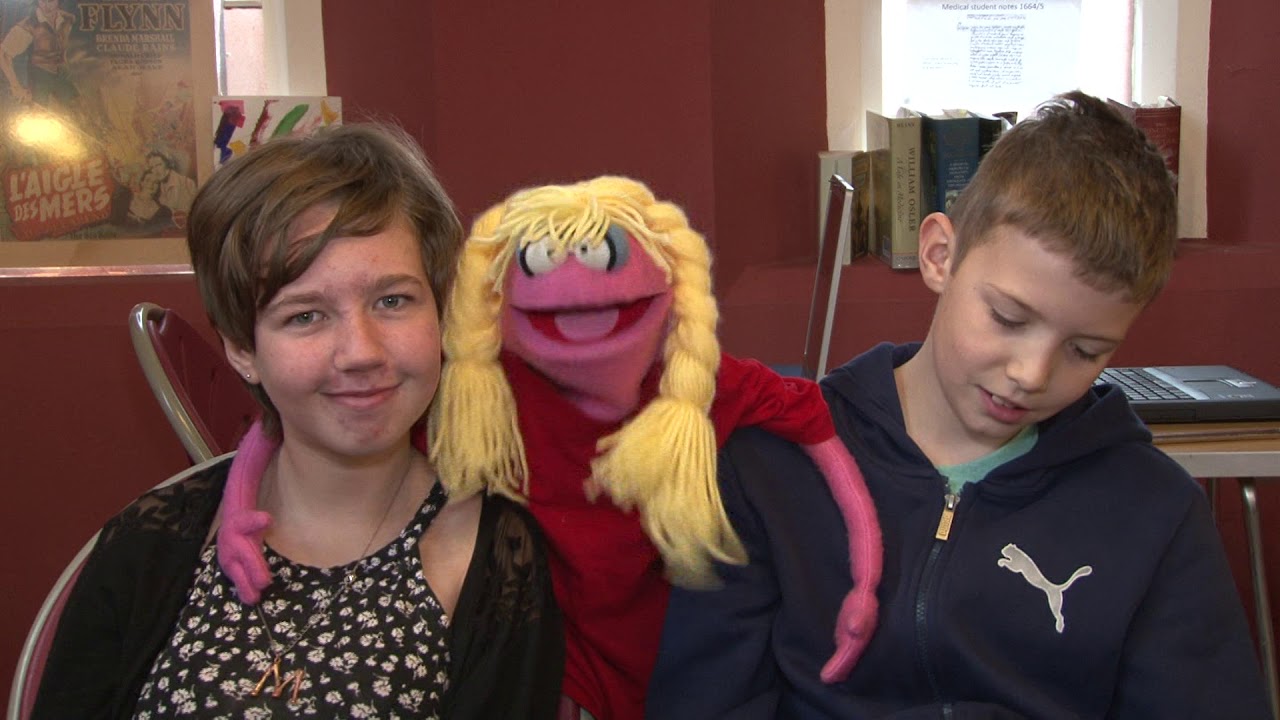
Meet 'The Little Professors'—40 children from the Northampton Hospital Archive Club who have a wonderful story to tell. They will take you back in time, to walk in the footsteps of others, on a fascinating journey along more than 275 years of history at Northampton Hospital. Come along and see for yourselves Funded by Tesco's Bags of Help scheme, Waitrose Community Fund and Northamptonshire Health Charity, edited by Lee Hillyard of April Productions, and written, directed and produced by Professor Andrew N Williams, this video was donated to the Royal College of Paediatrics and Child Health for all to enjoy. Many of the presenting children live with special needs, and health conditions and the music for the film was written by Harry Smith a young boy, under Professor Williams care, who had EXOSC3 pontocerebellar hypoplasia type 1 - an extremely rare neurological condition. We hope you enjoy the journey back in time... To find out more about the RCPCH please visit here: https://www.rcpch.ac.uk/
- My unspoken voice
Hi lovely people out there! I am Nora, a quiet girl from Austria. It’s a real honour for me to tell my story on this platform. I really hope you’d like to read it My life actually changed just when I thought my best time was yet to come. I was 21, when I sang a little too much at a gospel choir concert and got an inflammation in my throat that affected my voice-box. From one day to the next I felt a severe pain, lost my voice and suddenly wasn’t able to speak anymore. At the beginning I believed it’s just a simple infection, nothing to worry about…but as it continued for months, I started to get a bit sceptic… I went from one doctor’s office to the next, but nobody could figure out what was wrong with me. Many people with rare diseases might know this process well. The combination of being in constant pain and not able to talk with anybody really got me feeling anxious, lost, and very different from others. Pain prevented me from doing all the things I once used to do with joy: meeting my friends, singing, dancing, studying at university and just having a good time. It took a long time, until I finally got my diagnosis. What had started out trivial, turned out to be a painful rare disease called “eagle-syndrome” (long bones in my throat blocked some important brain nerves). It was a shock, certainly. The cruel thing of having an uncommon illness is probably that hardly anyone can tell you what to do for the best. It might be redundant to say that in a dedicated rare disease magazine and platform, but maybe this fact just cannot be highlighted too often. After trying many unsuccessful healing-methods, I decided to undergo some risky intraoral head/throat surgeries, which I assumed to be my ticket right back into my old life or better still, into a new one! But sadly this wasn’t the case. The surgeries only relieved some of my symptoms and caused severe new ones. I could barely open my mouth, move my head, neck or tongue, could barely swallow, eat, sleep or make any noise without pain. Not even morphine could take away my pain. I had a breakdown… However, having survived such dangerous surgeries and seeing my family caring so much about me, I just couldn’t give up. I told myself that this physical condition was neither meant to reduce my will to live, nor my faith. So I kept going. Aged 22, trapped in a body that didn’t function at all, unable to talk for more than one year, but still full of super big dreams – I looked for new help again. After a long period of hopelessness, frustrating defeats, and silent communication via pen and paper with my loved ones, I got to know a therapist from the Netherlands, who cared about my case! For two and a half years now this Dutch professor has been trying to manage my dysfunction. The treatments are really painful because my scars are very hard to cure and cause many problems. In addition, this professor is a busy man who travels a lot for his work. So I always have to go on “medical journeys” to receive my therapies, which is really exhausting and extremely expensive (I’ve already flown over 45 times all around the world). Aged 25, I still depend on constant treatments that cost a lot of money. I also do replacement therapies in my hometown now, as well as look for new therapeutic methods that heal intraoral scars in the mouth. The problem is that the pain always comes back and my voice capacity is very limited. I dream of once being able to sing under the shower again without having pain. And I hope so much that I will reach this aim one day. Although I am not dealing with the rare disease itself anymore, but more with the consequences of the surgeries, I kind of see it as my mission to raise its level of awareness. I know that there are many people out there suffering silently. (I did a scientific study for my diploma thesis. I believe this is the first quantitative study worldwide - two patient groups from five continents took part in it). I started blogging on Instagram about my journey trying to encourage people to believe in themselves. I want others to know it is possible to find your own way to happiness - despite life changing events/limitations or disabilities. I’d like to spread the message, that nobody should wait until tomorrow to live his dreams. Cause you know: life is short (but great!) Written by Nora Punzel To follow Nora and learn more about her story, follow her on Instagram @Nora_Punzel
- Rays of Sunshine
RYR charity spotlight Join us for our monthly #RYRcharityspotlight as we shine a spotlight on the charity that has caught our eye this month This month we have been amazed by the work of the charity Rays of Sunshine, who are making children’s dreams come true. From meeting Lewis Hamilton before an F1 race to hunting for Nessie the Lock Ness Monster, each wish granted is a unique and extraordinary experience bringing untold amounts of excitement and joy into the lives of young people in need Rays of Sunshine Children's Charity was formed in 2003 to brighten the lives of children who are living with serious or life-limiting illnesses, between the ages of 3-18, across the United Kingdom. Find out more below about what they do, who they are and how it all works. There are around 49,000 children and young people living in the UK with a serious or life-limiting illness*. This figure is increasing every year. Rays of Sunshine is a UK registered charity that brightens the lives of seriously ill children aged three to 18 across the UK, by granting their wishes and providing ongoing support within hospitals. They believe that every child deserves to experience happiness and put their illness on hold – even if it is just for one day. Their vision is to make wishes come true and turn them in to happy memories. They do this by: granting children’s individual wishes, however impossible the wish may seem granting hospital ward wishes hosting hospital activity days within children’s wards organising events for our children and families Wishes are as unique as children themselves. They give a child the chance to forget their illness and do something they could only dream of. Wishes make a child feel extra-special and bring them hope and happiness. They also provide families with treasured memories of happy times to look back on. Whether a child wants to be a princess or a fireman for a day, own an iPad or meet their favourite pop star, Rays of Sunshine works hard to make your wish come true. To read about young people from our rare disease community who have already received wishes please visit here: https://bit.ly/3exs34g To find out more and to nominate someone to bring a Ray of Sunshine into their lives, please visit www.raysofsunshine.org.uk/ If you have had a wish granted by Rays of Sunshine we would love to hear from you. Drop us an email to dmarriott@rarecommunication.com or follow us on Instagram @rare_youth_revolution
- Lockdown priorities
Dear RARE Friends, Having a rare disease and not being diagnosed until I was a teenager means I am surrounded by people that do not have chronic illness in common with me. I have never knowingly had a problem with this, I’ve always been a bit different and had to do things differently or not at all because of my health and nobody has ever questioned it. It’s quite embarrassing that although I’m doing a psychology degree it has taken a global pandemic for me to realise that prioritising my physical health is second nature to me but is not something other people may be willing to do. Seeing big groups of people in the park, or photos on social media of people having house parties when hundreds of people were dying everyday filled me with rage. It felt like a kick in the teeth, to me and everyone I knew being careful or shielding. I was so angry. These people had been asked to prioritise their own and others health for a few months and they couldn’t even do that. But it wasn’t until my Mum said “you might have done the same if you didn’t have FA (Friedreichs ataxia) to think about” that I really started to think. I, and other people like me are forced to prioritise our health everyday of our lives, it is not a choice. I am not saying that I am used to living my life in quarantine; quite the opposite. I have missed normal life more than I can say and having some routine and independence back is a welcome thought. But, prioritising my health is something I do everyday, I wake up on a morning and how I feel affects what I get done, plans I make revolve around my health, what I do for fun is affected, as is what I do to relax and on and on. I am used to being careful with myself because the consequences aren’t worth it. The more I think about this, the more obvious it is to me that barely anyone else I know has to consciously prioritise their health first. They can stay up all night finishing an assignment and still go to a 9am lecture because they’re able to prioritise university first, they can get drunk and sleep in a field for four consecutive nights because they’re able to prioritise fun experiences first. This is not me saying I can’t do well at uni or have fun experiences; they just can’t be prioritised above my health. I’m not sure why it took such extreme circumstances for me to feel segregated from everyone else, maybe it was the one rule for the majority and another rule for the high-risk group or maybe it was the physical isolation that made me feel emotionally isolated too, or maybe I just had too much time to think. I just know that while everyone was talking about how great it would be going back to ‘normal’ and not having to constantly prioritise their health over everything else, I was becoming more and more aware that ‘normal’ would never exist for me, and the more my disease progressed the bigger priority it would be. The way my brain works is I feel very strongly about something for a couple of days and then I almost forget about it. This is what happened here. I twisted, complained and cried about the unfairness of it all but then just moved on. There is no point dwelling on things I cannot change, especially when on reflection I wouldn’t change my life even if I could. One thing that I will always feel strongly about and never forget is that having good health is a privilege that people need to acknowledge. With love, Written by Georgia Hart Join Georgia and the rest of the #RAREYouthRevolution on Instagram @rare_youth_revolution
- RARE Revolution Magazine welcome exciting new partnership with TREND Community
RARE Revolution Magazine and TREND Community are proud to announce their new partnership, working together to power up the voices of the youth rare disease community RARE Revolution Magazine, TREND Community and RARE Youth Revolution are excited to announce a joint partnership to better understand the perspectives and needs of children and young adults living with rare disease. The RARE Youth Revolution platform, created by RARE Revolution Magazine, is powering up young voices, to empower a future generation of rare disease advocates and build a cross-condition youth community. In collaboration, TREND Community will apply its social data analytics to turn the stories and conversations shared by the young rare community into data that will revolutionise the way we think about rare disease and help drive change for young people affected by rare disease. This partnership will also see the launch of a new international intern placement initiative, launching later this year, allowing young people affected by rare disease to benefit from valuable work experience internships within RARE Revolution, TREND and trusted partner organisations. TREND and the RARE Youth Revolution invite individuals between the ages of 8-25 to get involved by answering short surveys, sharing content and by joining the conversations that matter to them via our online and social media channels. Candidates can also indicate their interest in a summer internship pilot launching this fall. This partnership marks an important development in the RARE Youth Revolution, allowing the youth community to build a strong collective voice, powered by the social listening technology of TREND and the community building and story-telling platform from RARE Revolution. The RARE Youth Revolution has begun! To find out more about how to get involved contact our Youth Editor, Daisy Marriott dmarriott@rarecommunication.com
- My little lockdown life
The gang at #TOYLIKEME have created this lovely little craft project to help keep you busy during the Covid-19 lockdown, so get your scissors, colouring pencils and glue at the ready— it's time to get creative! Writer, Rebecca Atkinson and Illustrator, Kate Read have created the ‘My Little Lockdown Life in a Box Project’ to keep you and your families colouring, cutting and snipping during lockdown to build a tiny version of your lockdown homes and world around you, complete with PE with Joe Wicks on the titchy telly, (huff, puff) tiny home-school work (yawn, yawn) and teeny weeny messages of thanks to NHS workers (our true heroes). “Right now, we are living through history in the making! You will look back on this period and tell your grandchildren about the strange time when the schools shut and we all had to stay inside for weeks and weeks and not see our friends. This project will enable you to make a playful heirloom record of this time.” Rebecca Atkinson, creator and writer The ‘My Little Lockdown Life in a Box’ printable download is available to buy here – https://www.tes.com/teaching-resource/-my-little-lockdown-life-in-a-box-a-playful-paper-based-play-set-to-explore-life-in-lockdown-12301868 All photos by Beth Moseley Photography