


A world of sound: Chapman Shum's journey through music and Norrie disease
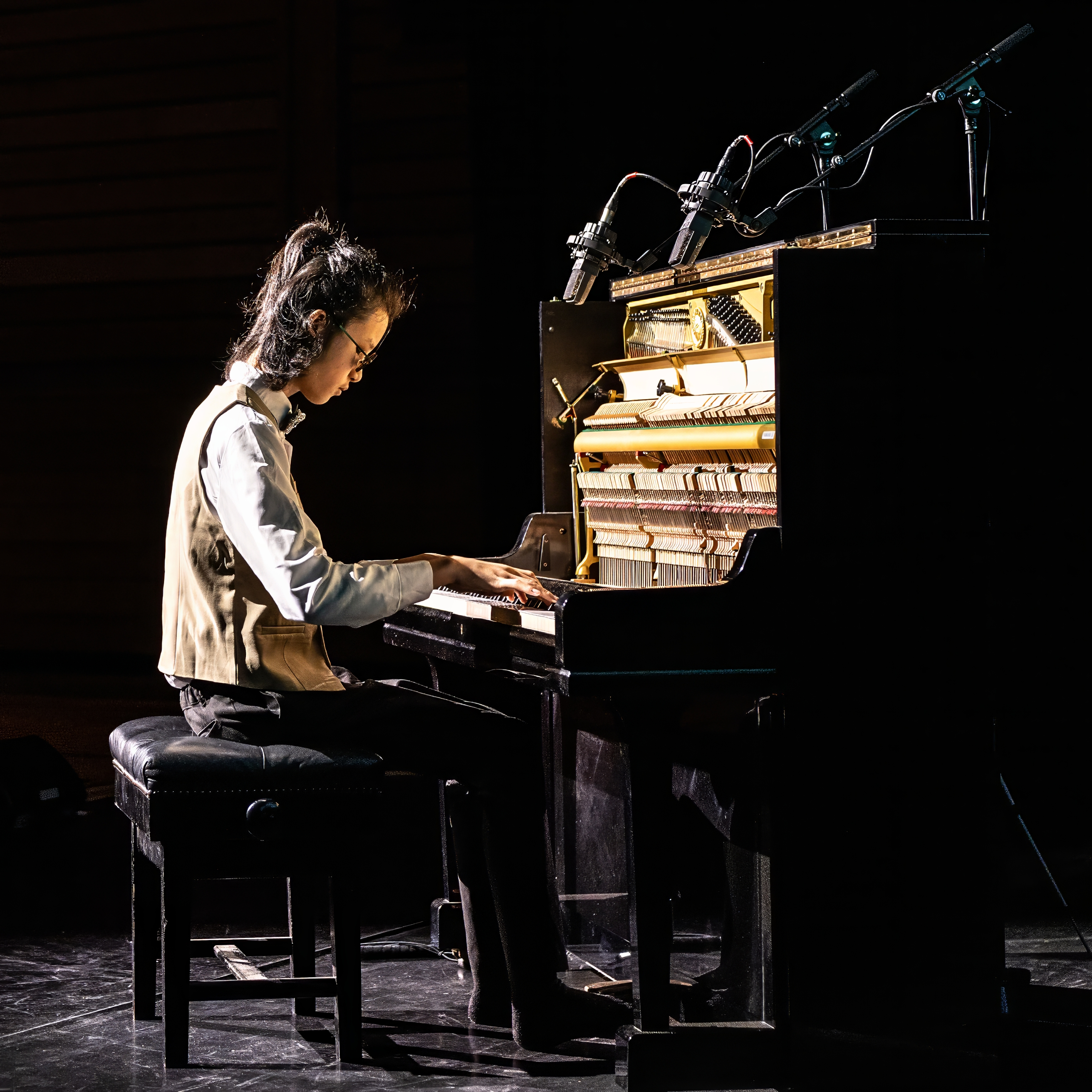
At 16, blind pianist Chapman Shum has performed for royalty, appeared on national television and achieved extraordinary musical success. Yet behind his achievements lies a 16-year search for a rare disease diagnosis — and a growing fear of losing the hearing that makes his musical world possible
Written by Chapman's family

Sixteen years searching for answers
Born blind in Hong Kong in 2010, Chapman later developed autism-related challenges, learning and speech difficulties, and episodes of fainting. In recent years, his hearing also began to deteriorate.
Without a diagnosis, his family lived with constant uncertainty. Were these symptoms connected? Would his health deteriorate further? What other challenges might emerge?
Doctors had long suspected Norrie disease, a rare genetic condition associated with congenital blindness, progressive hearing loss and developmental difficulties. However, Chapman's genetic mutation was exceptionally rare, with no known matching patient anywhere in the world. His family feared they might never receive a definitive answer.
Then, in November 2026, another patient with the same genetic mutation and similar symptoms was identified. This crucial discovery provided the evidence needed to confirm Chapman's diagnosis of Norrie disease spectrum, ending 16 years of diagnostic uncertainty.
Discovering music without sight
While searching for medical answers, Chapman discovered a remarkable connection with music.
He began learning piano at six. Unable to read conventional sheet music, and with Braille notation unsuitable for his learning needs, Chapman developed his skills through listening, memory and imitation.
His musical journal has taken him far beyond the classroom.
Music became an important way for him to communicate and express himself when words were difficult. With specialist teaching and dedicated support, he achieved Distinction in ABRSM Grade 8 Piano at just 11. At 13, he earned his ARSM Diploma in Piano Performance with Merit.
Today, Chapman studies classical piano performance at Trinity Laban Junior Conservatoire in London under Professor Andrew Matthews-Owen.
From everyday sounds to extraordinary stages
Chapman has participated in many performances. Appearing at concerts, festivals and charitable events internationally.
In 2025, he appeared on Channel 4's The Piano, performing Rush Hour in Hong Kong, composed by Abram Chasins and was praised by Mika and Jon Batiste.
In February 2026, he performed Impression of a Waltz, his original composition, for Queen Camilla at Clarence House during The Amber Trust's 30th anniversary celebrations.
His achievements include international music competition prizes, the Nasen Young Advocate of the Year Award and a London Youth Achievement Award.
For Chapman, sound is not merely something he hears. It is how he explores his surroundings, develops ideas and creates his own musical stories.

The greatest fear: losing his hearing
Despite his achievements, Chapman's family now faces another deeply personal concern.
His hearing has already begun to deteriorate, and they fear further loss. Blind since birth, Chapman relies heavily on sound. For a young musician whose creativity grows from listening to the world, progressive hearing loss threatens something central to his identity.
His family's greatest hope is that his hearing will stabilise.
Encouragingly, scientific research offers a possible path forward.
Researchers at University College London and Great Ormond Street Hospital, including Professor Jane Sowden's team, have been developing gene therapy for Norrie disease, supported by RNID and other research funders.
Norrie disease is linked to changes in the NDP gene, which produces a protein called Norrin, needed for healthy blood vessels in the eyes and inner ears.
Researchers have demonstrated that delivering a functioning version of this gene can protect delicate hearing cells and prevent hearing loss in mice with Norrie disease.
Further research aims to develop a treatment that can slow or prevent hearing deterioration in patients. Although promising, this remains experimental and has not yet been established as an effective treatment in humans.
For Chapman and his family, this research represents genuine hope.
After 16 years, they finally understand his condition. Now, they wish for a future where Chapman can continue hearing the sounds that inspire him.
Because for Chapman, music is more than an achievement. It is his voice, his connection to the world, and a vital part of who he is.
Socials
Instagram: @scmchapman
Facebook: Chapman Shum


