


Life growing up in a ‘RARE’ family
Updated: Aug 25
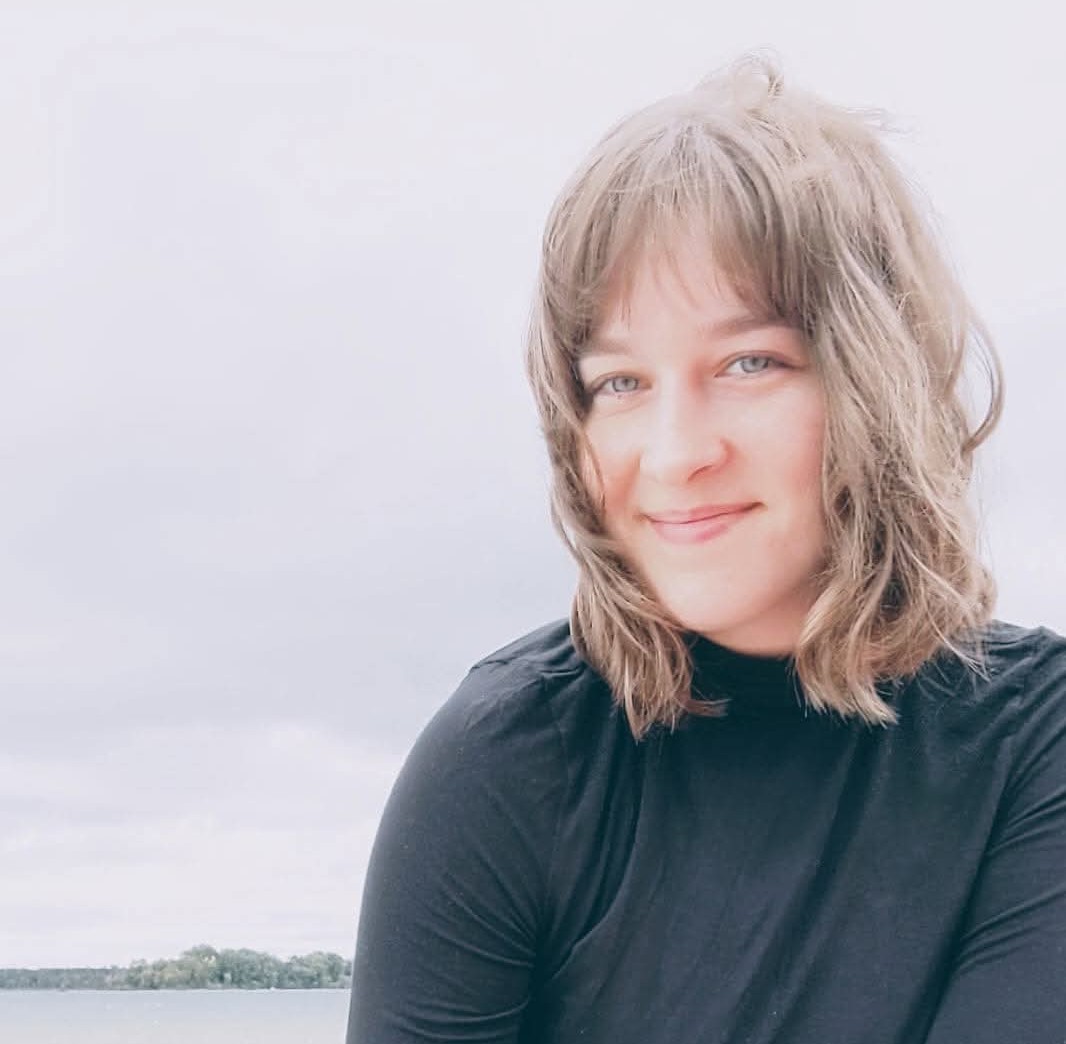
Rebekah Gold shares her experience of life as a young caregiver supporting her dad, who has Capgras syndrome. She describes the challenges and isolation that navigating life with a rare condition can bring.

Growing up supporting a parent living with Capgras syndrome often felt like living in another world.
Capgras syndrome is a rare condition, affecting approximately 0.12% of the general population¹, in which a person believes that someone close to them has been replaced by a look-alike impostor. This shaped both my father's experience of the world and my own experiences of childhood and caregiving.
As a young carer, I spent most of my life trying to find stories that reflected my own. While conversations about mental health have become more common, many experiences remain largely invisible. Supporting a parent through severe mental distress associated with a rare condition like Capgras syndrome can make you feel like you belong to a "rare family," too. My family is different, and we navigate situations that few people openly talk about.
One of the most difficult parts of supporting my father has been navigating uncertainty. I have had long conversations with him, trying to reassure him that my siblings, my mother, and I have not been replaced and that he has not lost us.
Sometimes, after these conversations, he will say, "You're right. I don't know why I think this way. I need to stop. I'm just going to stop." These moments are heartbreaking because I understand that this is not something he can simply choose to stop. I know that his distress is real and that his beliefs are not purposeful. I imagine that he often feels "rare," too.
Making sense of emotions
As a young person trying to make sense of these experiences, I carried fear, confusion, sadness, guilt, and anger alongside empathy and love. It feels so simple when I write it out like that, despite how complex it has been in reality. To this day, anger feels difficult to acknowledge.
When my father was diagnosed, I was around 19 years old. In many ways, it felt as though I had to immediately set aside years of heavy emotions that had built during periods when my family was unsupported and isolated. Once there was a diagnosis, I felt that I should only feel empathy because I understood that my father was navigating challenges beyond his control. Emotions are rarely that simple, like most things.
Telling myself how I should feel didn't make my other feelings disappear.
It pushed them deeper down, only to come up at times I couldn't control instead of at times I could. Young carers hold multiple truths at once: loving a parent deeply while grieving the impact of mental illness on family life, understanding a parent is not choosing their distress while still feeling angry about the circumstances and feeling proud of their family's interdependence and survival while also wishing things had been different.
![The above image is from Rebekah's MA research: Gold (née Norman), R. A., Alex, C. A., Sexton, C., Johnston, S., Sarmiento, B., Fatima, E., & Chomos, C. (2023). Understanding Young Carers and their Leisure (UYCL): A Critical Participatory Action Research (CPAR) Initiative [original artwork]](https://static.wixstatic.com/media/660e2b_bc5f6d7e329f490ba118d9f427c129fa~mv2.jpg/v1/fill/w_980,h_632,al_c,q_85,usm_0.66_1.00_0.01,enc_avif,quality_auto/660e2b_bc5f6d7e329f490ba118d9f427c129fa~mv2.jpg)
Every caregiving experience is unique
Over time, much of my own work has involved learning how to navigate that anger and redirect it toward changing the systems that continue to fail families like mine. The real issue was never my father; it was the lack of visibility and access to quality, compassionate resources for people navigating mental distress and for the families who support them. I'm thinking here of people living with schizophrenia, schizoaffective conditions, psychosis, and rare mental illnesses. It is an incredibly challenging journey.
Although I can relate to other young people supporting parents experiencing mental distress, I have also learned that every caregiving experience is unique. The rarity of Capgras syndrome often intensifies my sense of isolation, even within communities of young carers. I think it might always feel difficult for young carers to find someone whose experiences exactly mirror their own.
Today, my experiences as a young carer inform my research as a PhD candidate, where I hope to centre the stories of young carers supporting parents navigating mental distress through mental health system access and responses.


Through this work, I hope we can challenge the stigma surrounding mental distress and create spaces where young people know that, although our stories may look different, there are shared threads that connect us. Finding other young carers and turning my experiences into advocacy and research has shown me that even our rare stories can create connection and change.
Being part of a "rare" family has taught me that rarity does not mean invisibility. While no two stories are exactly alike, there is power in recognising that we do not carry these experiences alone. The more we speak openly about our rare experiences, the more we create compassionate communities that challenge stigma and isolation.
Rarity does not diminish that we belong, too.

Rebekah is the co-founder and lead of the Young Caregiver Council of Canada. You can find out more information at youngcaregivercouncil.ca and @canadayoungcaregivers on Instagram.
Reference
[1] https://journals.lww.com/tjpy/fulltext/2024/10020/capgras_syndrome,_an_interesting_but_rare.15.aspx


