


More than I ever imagined
- Niveda Kiridaran
- Mar 18
- 4 min read
Having experienced discrimination in the workplace, Niveda Kiridaran discusses how reaching out to, and becoming involved in, supportive organisations has helped her reframe her identity and guide and strengthen her path to advocacy
Recently, one of my friends asked me, “How do you identify yourself?” It was a strange but thought-provoking question to answer. It made me pause and reflect. Do I identify myself as a woman, Asian, a nutrition graduate, a library assistant or an advocate?
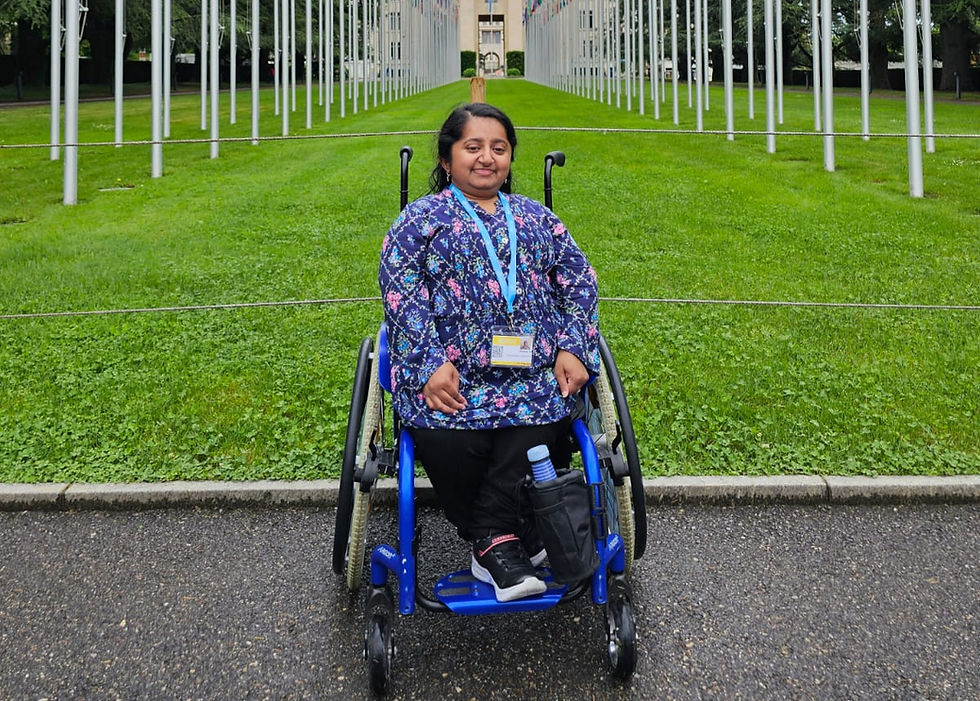
It also made me realise something important. For someone living with a visible rare condition such as osteogenesis imperfecta (which, when fairly severe is visible, but depending on the severity of the condition, often necessitates the need to be explained), people often see the condition first, before they see anything else. Yet at the same time, there are moments when that same visibility is overlooked — when support is withheld and your needs are quietly dismissed.
This conversation led me to reflect deeply on my journey and how advocacy became both my escape and my purpose. It has allowed me to grow in ways I never expected, particularly through the Youth Leadership Programme — an opportunity that came into my life at a time when I needed it most.
Before I continue, it’s important to say that at my workplace, my colleagues were aware of both me and my condition. I had even written a poster about my lived experience, which has been shared across the team.
To tell this story properly, I need to go back to September 2024. At the time, I was working a regular shift at my local library — in fact, my favourite one. It was attached to my old school, a building where I had spent eight years of my life and where I still knew many of the teachers.
One busy afternoon, while managing the ‘Summer Reading Challenge’, I couldn’t locate a particular folder and was told it was kept in the bottom drawer. Although I could open the drawer, I asked a colleague if they could help me lift the folder out. They responded by saying that I usually get out of my wheelchair to do things and suggested I do the same.
I explained that it would be difficult for me to get out of my wheelchair and back in again while lifting a heavy folder and I asked once more for assistance. Although help was eventually given, it felt forced, as though my request had been an inconvenience rather than a reasonable need.
Later, when I needed the poster for another customer, I feared the consequences of asking my colleague again, so I got out of my wheelchair to retrieve it myself. I had to lift the heavy file onto the table and my colleague could clearly see that I was struggling. When I mentioned that the folder was quite heavy, they responded that some items needed to be removed from it.
I initially dismissed the incident because I did not recognise it as discrimination. At the time, I minimised it. However, when a disabled person asks for reasonable assistance and that request is dismissed, it may appear small to others — but it is not small.
It was only after a friend and other colleagues pointed it out to me that I began to see it differently. I realised it was a subtle form of discrimination.
The word discrimination was not something I wanted to hear. My mind began to spiral. The following day, I forgot simple things for work — my water bottle, my staff badge. I cried unexpectedly. I became overwhelmed easily and, most significantly, I became afraid to ask for help. I found myself apologising for needing support — or avoiding asking altogether. I began to shut down, distancing myself from friends and colleagues and building a protective guard around me.
It was then that I felt in need of somewhere to escape from the stresses at work. I joined WeSwim, a swimming club that supports adults with disabilities in the water. Work also offered counselling, and I reached out to friends from the Brittle Bone Society (a charity that supports the osteogenesis imperfecta (OI) community and assisted me recently with securing my current wheelchair). Speaking to people who truly understood what I was experiencing helped me feel less alone.
Yet work no longer felt the same. It was as though my passion had quietly disappeared. That was when my friends encouraged me to apply for Rare Diseases International’s Youth Leadership Programme (RDI YLP). I thought, why not? So, I applied and I was accepted.
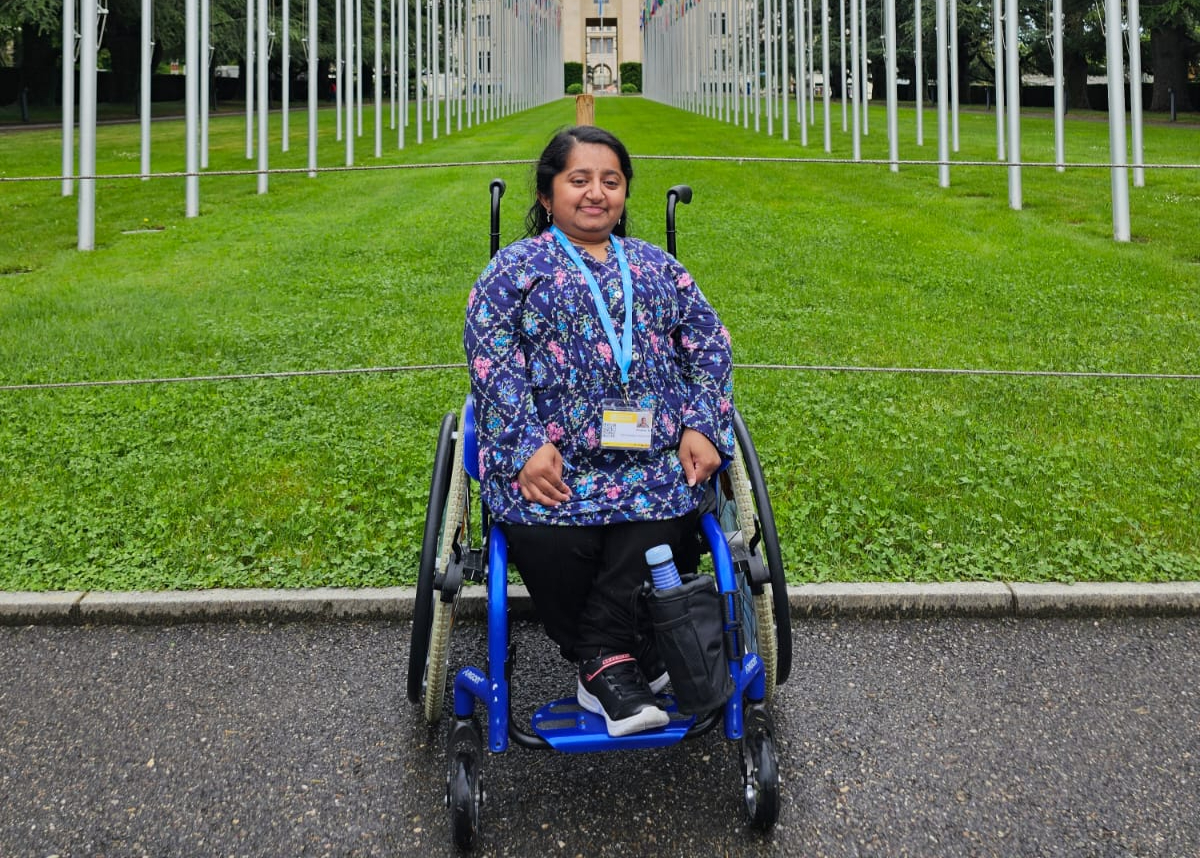
In May, I had the honour of attending the 78th World Health Assembly in Geneva — one of the most memorable experiences of my life. I found myself advocating for the rare disease community on a global stage. I achieved things I once thought were impossible, including flying abroad for the first time in 13 years and stepping inside the Palais des Nations.

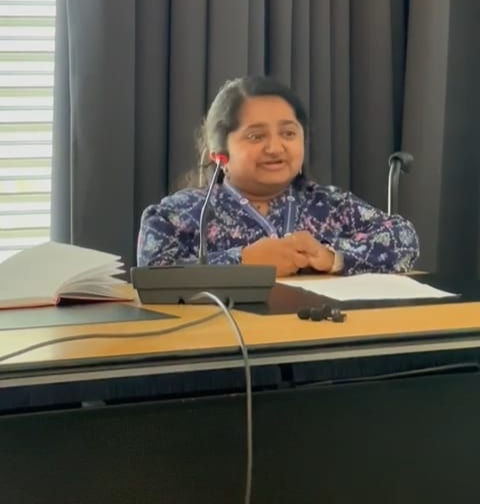
What made the experience even more meaningful was speaking on a panel about mental health and stigma at the Voice for Change: Youth Leadership in Advocacy and Innovation side event, hosted by Rare Diseases International. It was an honour to share my story and amplify the voices of so many others.
The programme allowed me to be fully myself. It transformed pain into purpose. I refused to be defined as a victim of discrimination. Instead, the Youth Leadership Programme gave me the platform and confidence to reclaim my narrative and use it to create change.
The RDI YLP offered me more than I ever imagined. It empowered me to advocate at a level I once believed was beyond my reach — and in doing so, it reshaped how I identify myself.
Not just as someone living with a rare condition.
Not just as someone who experienced discrimination.
But as an advocate.
Socials
Instagram: @niveda.kiri and @niveda.k06
LinkedIn: Niveda Kiridaran


