


Nine years, four diagnoses, one voice
Nine years, four rare diseases, and how I went from hiding my story to finding my voice
Written by Narishka Fourie
At nine years old, I was learning how to explain why I couldn't do certain things. Before long, I was learning how not to explain them at all.
I became very good at changing the subject.

I didn't want to answer questions about my health, explain my restrictions or feel like people saw my diagnoses before they saw me. I wanted to be a normal schoolgirl. I wanted to play netball, spend time with my friends and worry about the same things as everyone else. I didn't want every introduction to come with a medical explanation.
And for a long time, I thought the easiest way to make that happen was simply not to talk about it.
If someone had told nine-year-old me that one day, I would use my voice to speak and teach people about rare diseases, I don't think I would have believed them.
Because back then, finding my voice was the last thing I wanted to do.
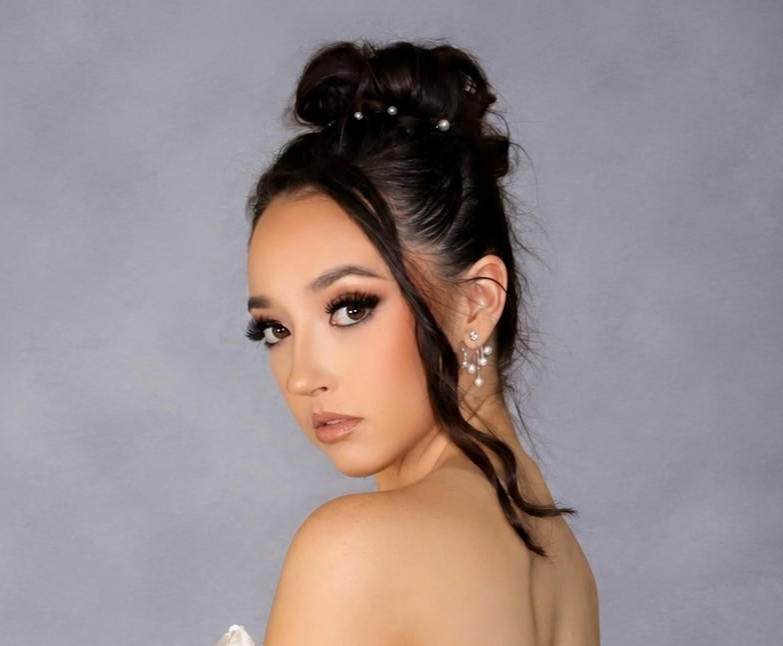
Today, I'm eighteen. I live with Marfan syndrome, Chiari malformation, scoliosis and PoTS (postural tachycardia syndrome). I'm a model, a rare disease advocate, the founder of Heart2Heart Outreach, and someone who loves music, singing and songwriting. But I'm also a daughter, a sister, a friend and a young woman with ambitions, ideas, big dreams and plenty still to figure out.
Those parts of me have always existed alongside my diagnoses. It just took me time to understand that I didn't have to choose which parts of myself people were allowed to see.
The girl who wanted to be ordinary
My first three diagnoses came when I was nine. Suddenly, things that other children rarely had to think about became things I had to consider. I went from playing netball to navigating restrictions I didn't always understand. I couldn't carry my schoolbag up the stairs at school.
Physical education became complicated, and there were times when teachers didn't believe me when I explained that I couldn't participate.
It's difficult to put into words what that feels like as a child. You're trying to understand your own body and your own limitations, while also trying to convince other people that they're real.
I didn't always have the language to explain what was happening. Sometimes, I didn't even understand it myself. And when people misunderstand you often enough, you can start to see yourself through their eyes. I remember how easy it was to feel like the sick kid, rather than just a kid.
As I got older, I became more private about my conditions. They weren't a secret, exactly, but they weren't something I volunteered in conversation. Changing schools after Grade 7 gave me a chance to start fresh, and I liked being able to introduce myself without my medical history becoming part of the introduction.
I wasn't pretending my diagnoses didn't exist. I was trying to make sure they weren't the first thing people knew about me.


The conversation I wasn't ready to have
At fifteen, my mom approached Rare Diseases South Africa about an opportunity for me to become a Patient Voice Ambassador for Marfan syndrome.
My first reaction wasn't excitement. I was unsure, and honestly, a little scared. I had spent years avoiding conversations about rare disease, and now I was being invited to make those conversations part of my life.
I wasn't sure I wanted that.
But I agreed to meet the people behind the organisation. Getting to know the team and understanding the work they were doing slowly changed the way I looked at advocacy. I met people who understood experiences that I had struggled to explain, and I began to see that sharing my story could make someone else feel less alone.
It wasn't an overnight transformation. I didn't suddenly become comfortable talking about everything, and accepting my diagnoses didn't mean every difficult feeling disappeared.
But I began to understand that I could talk about rare disease without allowing it to become my entire identity.
Over the past three years, being a Patient Voice Ambassador has given me opportunities to learn, connect and use my experiences in ways I never imagined when I was nine. I'm incredibly grateful to the people at Rare Diseases South Africa who helped me find a place in this community.


Nine years later, another diagnosis
Then, at eighteen, came PoTS.
Nine years after my first diagnoses, I found myself back in the world of investigations, doctors, tests and waiting for answers. Some of it felt familiar, but that didn't make it easy. There were new experiences, including a tilt-table test and another condition to understand and learn to live with.
I think there's a misconception that once you've been through a diagnostic journey you somehow know how to handle the next one. You don't.
You might understand more. You might know which questions to ask. You might have a little more perspective. But every new diagnosis brings its own uncertainty, its own adjustments and its own things to work through.
And even when you think you've finally figured out how to manage everything, life can introduce another change.
Living with rare disease means constantly adapting. Sometimes it's a new restriction. Sometimes it's having to rethink something you had planned. Sometimes it's watching friends do things you wish you could join in with. And sometimes it's simply being tired of having to think about things that other people can take for granted.
I don't want to pretend that those experiences are easy. They aren't. There are days when it is frustrating, disappointing and difficult.
What has changed is not that the challenges have disappeared, but that I have grown in the way I face them.
At nine, my family carried most of the medical conversations. At eighteen, I could take a more active role, ask questions and understand more of what was happening. I've also become much more aware of everything my family has carried alongside me.
It takes a village, and I am fortunate to have one.
A different kind of stage
One of the moments that brought everything full circle for me happened at Toddler & Tween of the World South Africa 2026.
Pageantry has given me opportunities to challenge myself, meet incredible people and discover what I'm capable of. This particular journey involved fundraising, projects, preparation and a lot of stepping outside my comfort zone.
When the awards were announced, I was named Overall Senior Spokesmodel, placed in the Top five in my age category, awarded second runner-up and named an Autism Ambassador.
The interview recognition was especially meaningful because I had been recognised for expressing who I am and what matters to me.
I couldn't help thinking about the little girl who once wanted nothing more than to avoid those conversations.
She would never have imagined that the experiences she struggled to talk about could one day help her connect with people, represent a cause and stand confidently on a stage.
I didn't get there because my journey was easy. I got there with hard work, support, uncertainty, setbacks and a lot of growing. My experiences have shaped the way I see the world and I have learnt to use that perspective for something beyond myself.


More than the story of my diagnoses
There is so much more to my life than rare disease and I want people to know that.
I love music. I love singing and writing songs, even if it's usually in the comfort of my own home. I love modelling, pageantry, spending time with friends and making memories with my family. I love getting involved in projects and finding ways to turn ideas into something meaningful.
Heart2Heart Outreach is one of the projects closest to my heart. I started it because I believe that small acts of kindness can change the world, even if that world is just someone's world. I've also spent time supporting autism initiatives throughout the year and helping friends and family with causes and projects that matter to them.
These things aren't separate from who I am. They're part of the person I've become: someone who cares deeply, loves creating opportunities to help others and believes that even small contributions can matter.
I still have difficult days. I still have limitations. I still have to adapt, sometimes when I least expect it. I don't think living with rare disease ever becomes something you simply master, because life keeps changing and asking you to find new ways forward.
But I've learnt that a difficult experience doesn't have to be the only thing that comes from a difficult experience.
I can't change the fact that I have four diagnoses. I can't go back and make certain parts of childhood easier. And I wouldn't tell my younger self that everything would be fine all the time, because that wouldn't be honest.
What I would tell her is that her life is going to be so much bigger than she can imagine. That she will find people who understand. That she will discover things she loves, build projects she believes in, stand on stages she once thought were out of reach and find ways to make a difference.
And that she will never have to stop being a daughter, a sister, a friend or simply herself to be an advocate.
I used to think that talking about rare disease meant letting it take up more space in my life.
Now I understand that using my voice can make space for other people, too.
I want rare diseases to be seen, not just different. I want young people living with them to know that they are not alone, and I want the world to look beyond a diagnosis and see the person behind it.

Nine-year-old me spent so much time trying to change the subject. Eighteen-year-old me has finally found something worth saying.
Socials
Instagram: @narishka_fourie_


