


Living with achalasia: my journey to diagnosis and treatment
Updated: Aug 25
Mealtimes became a constant struggle for Aoife after she started choking while eating. She was ultimately diagnosed with achalasia, a condition which affects the oesophagus. In a moving account, Aoife shares her story of living with achalasia.
Before I was diagnosed with achalasia, eating had become something I feared.
What should have been a simple meal often turned into a frightening experience. While I was waiting for answers, my partner Eoin regularly had to perform the Heimlich manoeuvre on me at our dinner table because food would become stuck in my oesophagus. Most days, I would try to force food down by drinking large amounts of water. If that didn't work, I would have to make myself vomit to relieve the blockage.
This became a daily occurrence.

Over time, eating stopped being enjoyable. Every meal came with anxiety, wondering if this would be the time something got stuck again.
I felt embarrassed eating around other people, and I started to feel like nobody truly understood what was happening to me.
My symptoms first began in May 2023 when I started choking frequently while eating. When I spoke about it, many people dismissed it as anxiety. I was told that perhaps I was nervous while eating or overthinking things. Deep down, I knew something wasn't right, but because the symptoms weren't visible to others, it was difficult to explain just how much they were affecting my life.
After several months of struggling, I visited my GP, who referred me to the ENT clinic. In May 2024, I attended my appointment where a camera was passed through my nose and down my throat. The doctor couldn't see anything obviously wrong but arranged a barium swallow X-ray for further investigation.
A barium swallow is a test where you drink a special liquid that shows up on X-rays, allowing doctors to see how food and liquid move through your oesophagus.
I had this test in October 2025, and in January 2026, I received a phone call telling me that I had achalasia. Like many people, I had never heard of it before. I remember hanging up the phone and immediately searching online, desperate to understand what was happening to my body.
Achalasia is a rare condition affecting the oesophagus, the tube that carries food and drink from your mouth to your stomach. In people with achalasia, the nerves controlling the oesophagus become damaged, preventing food and liquids from moving normally into the stomach. Food can become trapped in the oesophagus, leading to symptoms such as difficulty swallowing, choking, regurgitation, chest pain, and weight loss.
One of the most difficult things about learning that I had achalasia was discovering that there is currently no cure.
Achalasia is considered a progressive condition, meaning that symptoms often worsen over time if left untreated. The nerves in the oesophagus become damaged, and unfortunately, those nerves cannot currently be repaired or restored. While treatments such as balloon dilations, pneumatic dilations, Botox injections, and surgery can significantly improve symptoms and quality of life, they do not cure the underlying condition.


With family
For me, looking back, this progression became very clear. What started as occasional choking episodes gradually developed into daily difficulties with eating and drinking. Over time, swallowing became harder, food became stuck more frequently, and eventually even liquids became difficult to get down. It was frightening to experience something so fundamental becoming increasingly difficult.
Although achalasia is a lifelong condition, I have learned that there is still hope. With the right treatment, specialist care, and support, many people with achalasia can regain a good quality of life and continue doing the things they love.
While receiving a diagnosis brought some relief, there were still many unanswered questions.
In February 2026, my GP referred me to a specialist in Mercy University Hospital in Cork, while I also continued to receive treatment in Waterford.
When I attended my appointment in Cork, my specialist explained that there are three different types of achalasia and that further testing would be needed to determine which type I had.
To investigate this, I underwent oesophageal manometry. This test involves passing a thin tube through the nose and into the oesophagus. The tube contains sensors that measure how well the muscles and nerves in the oesophagus are working. While it wasn't the most comfortable experience, it was an important step towards getting answers.
At around the same time, I underwent an endoscopy and balloon dilation in Waterford. Unfortunately, my symptoms continued to worsen.
One day while eating lunch at work, I experienced one of the most frightening moments of my life. Food became lodged in my oesophagus, and I began choking severely. Three members of staff had to perform the Heimlich manoeuvre before an ambulance was called and I was taken to hospital.
Not long afterwards, I was admitted to hospital with another food blockage.
During my stay, I was brought for an endoscopy, where doctors attempted to push the blockage into my stomach. Unfortunately, the procedure was unsuccessful. Two hours later, I was brought back to theatre under anaesthetic, where they thankfully managed to clear the obstruction.
When I was discharged a few days later, I was instructed to remain on a liquid diet. However, over the weekend, I realised that I could no longer swallow liquids either. Everything seemed to get stuck.
I returned to hospital to hospital, frightened and exhausted.

A few days later, I underwent another procedure to have an NG tube inserted.
An NG tube, or nasogastric tube, is a feeding tube that passes through the nose, down the throat, and into the stomach. It allows nutrition, fluids, and medication to be given when someone can no longer eat or drink normally. Although it was difficult both physically and emotionally, it provided the nutrition my body desperately needed.
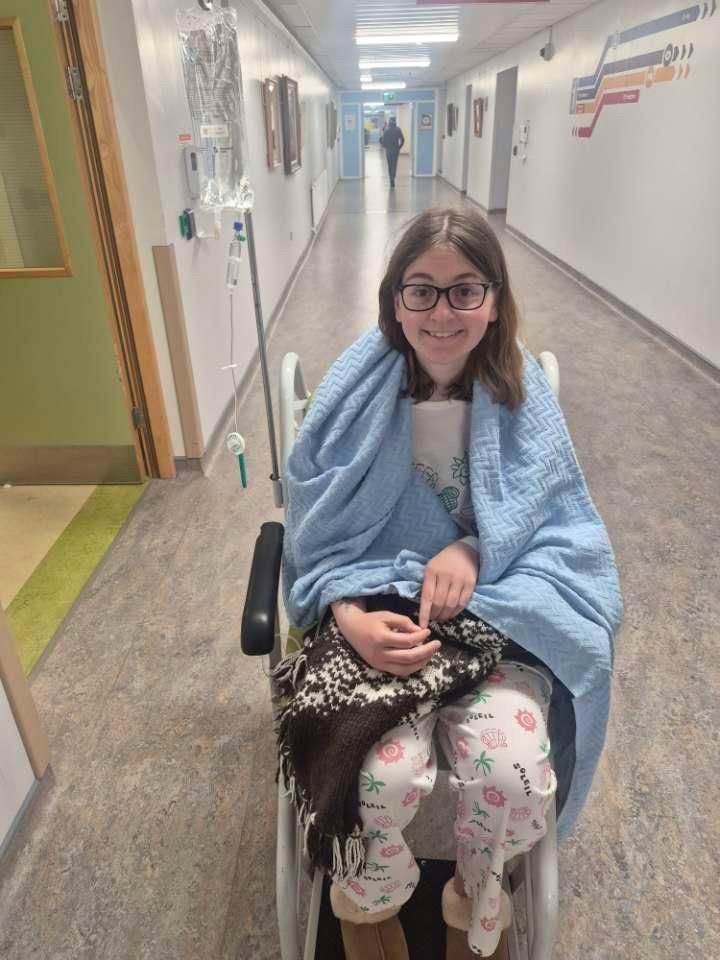
I spent ten days in University Hospital Waterford before being transferred by ambulance to Mercy University Hospital in Cork.
By this stage, both my body and mind were exhausted.
I missed normal life. I missed eating. I missed socialising without worrying about choking. I missed feeling like myself. Watching other people eat and drink without difficulty was incredibly difficult because it highlighted everything I had lost.
Thankfully, my transfer to Cork marked a turning point.
There, I underwent pneumatic dilation, a procedure designed to stretch the muscle at the bottom of the oesophagus to help food and drink pass more freely into the stomach.
Following further testing and treatment, I finally received confirmation that I had Type 2 Achalasia in May 2026.
Although receiving a formal diagnosis was emotional, it also brought a sense of relief. After years of symptoms, uncertainty, hospital admissions, choking episodes, and food blockages, I finally understood what was happening to my body.
The relief I felt after my pneumatic dilation is difficult to put into words.
For the first time in a very long time, I could eat and drink again. Something that most people take for granted suddenly felt like the greatest gift in the world. Being able to sit down and enjoy food without fear was life-changing.
My journey isn't over yet. I am due to return to Cork at the end of June for my second pneumatic dilation, and for the first time in a long time, I feel hopeful about the future.
Living with a rare disease has taken a significant toll on my mental health. There were many moments when I felt scared, frustrated, isolated, and overwhelmed. The uncertainty was often one of the hardest parts.
However, I have been incredibly fortunate to have amazing support around me.
My partner Eoin has been my rock throughout this entire journey. He visited me every day while I was in hospital, stayed overnight whenever he could, and stood by me through every setback and every victory. There are no words that can truly express how grateful I am for everything he has done. Through some of the most difficult moments of my life, he never left my side.
My family and friends have also been there every step of the way. Their support, encouragement, and love carried me through some of my darkest days and reminded me that I was never facing this battle alone.
Looking back, I believe my achalasia was progressively getting worse over time. What started as occasional choking episodes gradually developed into daily struggles with eating and drinking. At first, I could usually manage by drinking large amounts of water or regurgitating food when it became stuck. However, as time went on, those methods became less effective, and my symptoms became increasingly severe.
Eventually, even liquids became difficult to swallow, leading to hospital admissions, an NG tube, and specialist treatment. Looking back now, I can see how the condition slowly progressed over the years before finally reaching the point where I could no longer manage it on my own.
One of the main reasons I am sharing my story is to raise awareness of achalasia. It affects approximately one person in every 100,000 people, making it an incredibly rare condition.
Before my diagnosis, I had never heard of it, and many people I have spoken to since haven't heard of it either.
Because of this, I decided to create a Facebook support group called "Achalasia Support Ireland." When I was diagnosed, I struggled to find an Irish support group where people living with achalasia could connect, share experiences, and support one another. I wanted to create a space where people would feel less alone and have access to support from others who truly understand the challenges of living with this condition.

If sharing my experience helps even one person recognise their symptoms, seek medical advice sooner, find support, or feel less alone in their own rare disease journey, then telling my story will have been worthwhile.
Living with achalasia has changed my life, but it has also shown me the strength of the people around me, the importance of advocating for yourself when you know something isn't right, and the value of never taking life's simple moments for granted.
Achalasia may be rare, but the people living with it deserve to be seen, heard, and understood. Through greater awareness and support, I hope that future patients will feel less isolated than I did when I first received my diagnosis.
Socials
Instagram: @aoife_johanna


